Fight against the silent killer tinnitus
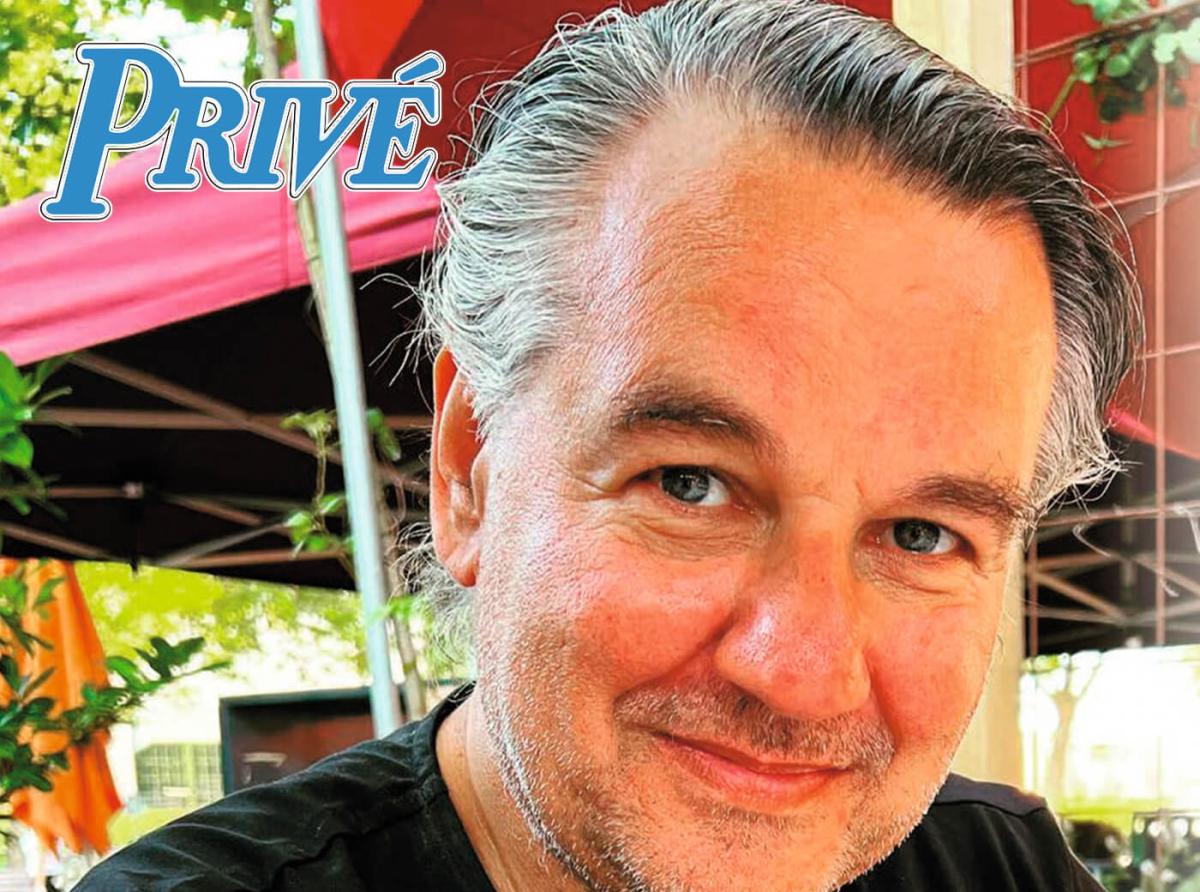
Everyone knows his music, but only a few know him. Composer Stephen Emmer is the man behind countless TV theme tunes, from ‘Tijd voor MAX’ to ‘Beau’. For over ten years, the musician and son of former news anchor Fred Emmer has suffered from tinnitus, a constant ringing and buzzing in his ear. With his Artists Against Tinnitus Foundation, he is now taking up the fight against the ‘invisible’ disease.
No more silence, always that incessant nuisance in your head. It is every musician's nightmare, and so it is for Stephen Emmer (65). His name may be unknown to the general public, but in the music world he is known as The Seven Minute Man, because a tune or jingle of his can be heard on the radio and/or TV every seven minutes. Unfortunately for him and many others, this is never without background noise.
‘At least one in three musicians at the Concertgebouw Orchestra has tinnitus,’ Stephen knows, just as he knows that this is only the tip of the iceberg. ‘It is becoming a worldwide epidemic, also among young people. Something has to be done now.’
He himself ‘came out’ last year. He felt it was high time to break the taboo, to make the hearing disorder a topic of discussion, and to fight for volume measures at music events and concerts. Many musicians prefer not to talk about it for fear of losing their jobs.
He himself kept that annoying ‘fellow resident’ in his head a secret for more than ten years, but by now, more artists dare to talk about it. Milo Ddriessen of Goldband revealed that he, too, suffers from tinnitus, ‘A kind of whistle and sometimes a low hum in the ears’, and DJ veteran Joost van Bellen hears ‘a little buzzer and beeping sound like the old days with the TV test pattern’.
Emmer: ‘It is a condition that is difficult to explain. Others don’t see it and don’t hear it, but it is there. Always.’
Too much stress, too many stimuli can throw him off balance.
When I feel that coming on, I must take a rest.
Going out to a café, restaurant, or concert is almost out of the question now. That is often too intense. For Stephen, in hindsight, the misery began about forty years ago.
‘In the early eighties, we were playing with our band The Lotus Eaters in an English theater where we were using the sound equipment of heavy metal band Motörhead. During the soundcheck, I was standing behind the keyboards and gestured that I couldn't hear anything. Suddenly, two of those tough roadies turned the volume knobs up really hard. A huge bang. They were laughing, thinking it was a funny joke. It hurt my ears. We just played that evening. Ultimately, something must have been damaged back then.’
Silent Killer
For decades, there seemed to be little wrong. Stephen: ‘Until I was standing in the bathroom and my then-girlfriend shouted something at me from the living room. I couldn't understand anything.’
The beginning of a grueling time
‘Because that is tinnitus, a silent killer. You could compare it, even though that might sound a bit heavy, to diabetes or high blood pressure. It can strike suddenly. It crashes into your head.’ It is sometimes said: ‘You must try to make a friend of your illness,’ but it never becomes a friend. At most, it is something you tolerate, something you have to learn to live with.’
Sometimes the walls would close in on Stephen, and he experienced moments of despair.
‘Then I would think: Can I still continue in my profession?’
One of his therapists encouraged him to do so.
‘By now, I have learned to continue composing anyway. I even dare to say that I created a number of my best pieces after my diagnosis. In that respect, I may well be the living example that you don’t have to give up. Although not every form of tinnitus is the same.’
Not everyone can handle it
‘At one of the support groups I attended, there was a taxi driver who was having an incredibly hard time with it. Later, I heard that he took his own life.’
Stephen went on and continues. In 2020, he was rewarded with a Buma Award for his entire oeuvre, and in addition to all those theme tunes for programs like NOS Journaal, Goedemorgen Nederland, RTL Nieuws, RTL Boulevard, and Waku Waku, he also has a whole series of special CD projects to his name, for which he managed to secure major stars such as Lou Reed, Chaka Khan, and Julian Lennon.
Lou Reed turned out to be anything but the grumpy star he is often portrayed as. The American pop hero recited a poem on Emmen's spoken word album Recitement. Simply because he enjoyed it. It all started, Stephen explained in a previous interview, with a phone call from New York. Tony Visconti, the man behind David Bowie's great albums, had heard a demo and wanted to produce that artsy album by that unknown Dutch composer. Stephen: ‘Of course, I couldn’t afford that, but his agency said: ‘Mister Visconti is no longer in it for the money.’ He also knew someone from his tai chi class, with a beautiful deep voice, who might be willing to participate. Indeed: Lou Reed.’
India
That he ended up in music himself is not all that surprising. His mother, Roekie Aronds, was a ballet dancer/actress.
‘She starred in the popular TV series Pension Hommeles by Annie M.G. Schmidt and was the young woman for whom Donald Jones sang that still-famous song Ik zou je het liefste in een doosje willen doen. My parents separated when I was still very young. She had an adventurous and travel-loving spirit. When I was ten, she took me to India. In a little Austin Mini! Suddenly, I was in an ashram with my ABC book. Later, she moved to Aruba and Suriname, where she started her own dance school.’
Stephen returned to the Netherlands out of homesickness and moved in with his father, who was certainly no ordinary parent. As a news anchor, Fred Emmer had become a TV hero at a time when there were still very few channels.
Stephen: ‘I still miss him. He has been gone for a few years now. He wasn’t always an easy man. People often called him straightforward, but I would rather say he was honest. He could talk beautifully, but he wasn’t a smooth talker. He enjoyed his fame himself, although I sometimes found that difficult. You’d be sitting down to eat and someone would be standing at our little table again for an autograph. When he took me to school, I would often say: Just let me get off around the corner. Later in my career, I sometimes found it annoying that people kept asking about him in interviews. Now I don’t have a problem with that anymore. I do it with pleasure; I remember his humor, his wit. And how, as a child, he sent me stories about Kobus the Bell Ringer, a little man he had invented himself. Wherever he was, he never forgot that. And if he stood for something, he stuck to his judgment, no matter what.’
Just as Stephen is doing now in his fight against tinnitus. Not so long ago, he spoke with the now-acting State Secretary for Health, Welfare and Sport, Maarten van Ooijen.
‘But unfortunately, he listened to Horeca Nederland by not introducing more legislation regarding volume reductions. I really have nothing good to say about that.’
And no, not for the decision to let the recent concerts by the German rock band Rammstein in Groningen go ahead after all, despite the deafening noise that was under discussion.
‘An exception was made because otherwise they would have moved to another location. But we are fighting on!’
[Privé - Corrie Verkerk]
Listen to Mt Mundane on your favourite music platform here
Or buy the Mt Mundane album on CD here