Self-taught and first media music composer
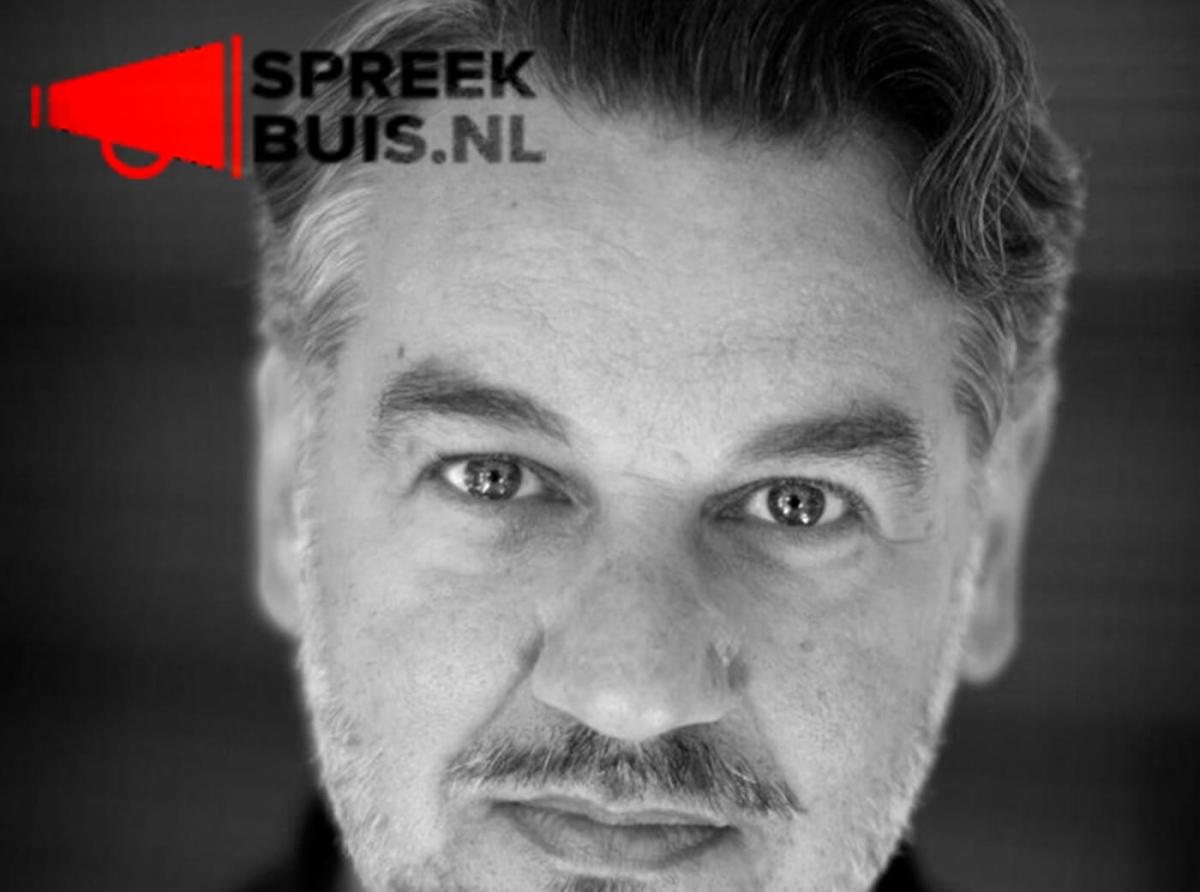
"When I started in the 80s, a theme tune was allowed to last 30 to 60 seconds; the one for 'Dagboek van een herdershond' was practically a song. Back then, making a theme tune was something composers and musicians did on the side; it wasn't a profession. They performed in the evenings, and then it was: 'Oh right, we also have to do something for Hilversum.' That's how I started too."
Vogue Estate
In Hilversum, they found my first album, Vogue Estate from 1982—the soundtrack of an imaginary feature film—very evocative. The phone didn't stop ringing, and that is how it became my profession. I was the first full-time media composer in the Netherlands with that; it was still uncharted territory.’
Emmer can explain exactly what that territory entails like no one else. ‘You have to create a mini-mosaic; you have to get to the point very quickly, hit the essence without an introduction. Not everyone can do that. A man like John Ewbank, for example, Marco Borsato’s regular composer, once said that he can’t manage such a short sprint. He needs more space, just like jazz composers, for instance. Media music, tunes, require a specific skill; it really is a specialty. In addition, you naturally need knowledge of genres, repertoire, trends, and technique.’
Self-taught
He acquired that knowledge himself through playful learning and working. ‘I am self-taught. In my youth, I heard all kinds of music.’ My parents divorced when I was young, and I lived with my mother, who danced with the Scapino Ballet, gave dance lessons at home, and had a very eclectic taste in music. Besides classical, she would also put on jazz or Santana. I absorbed that. At some point, we moved to Suriname, where she started her own dance studio. During the break, she would hear me playing the piano. ‘Do you know what you’re playing?’ she asked. I had no idea. ‘Beethoven,’ she said. I was just playing along with what I had heard. Later, I did think that perhaps I should have received formal training. But then again, I was already creating complex big band arrangements. It led to me being able to improvise well, being one of the first to make music on a computer, but also being able to work perfectly well with orchestras. I am a hybrid type, as they say these days.’
His musical versatility and flexibility have served him well in his dealings with his clients. ‘I am now on my third generation of clients. A lot has changed over the years. I used to call a director to hear what he wanted; now I sometimes talk to a marketing consultant. They look at target audiences and say, for example, that the music needs to reflect the feelings of women. That is a bit vague, but it is precisely my expertise to translate that into music.’
Trends
A lot has changed in the world of TV theme tunes since the 1980s. ‘Tunes have become shorter and shorter; you now have about 10 seconds to achieve maximum recognition. You can’t really tell a story anymore; it’s instant, an immediate hit. In the past, a theme tune only had to be a melody that you could hum along to. Under the influence of gaming, among other things, that has changed. Young people don’t necessarily need a melody to recognize something; the timbre alone is enough. I have noticed, however, that some things are cyclical; trends come, go, and come back again. When I started out, for example, I made the theme tune for the Jeugdjournaal (Youth News). For that, I wanted to move away from the atmosphere of children’s songs and connect with things young people were doing and recognizing, such as gaming. Ten years later, tunes became less adventurous, and even later I was given more experimental freedom again.’
In the period 2000–2015, Emmer, who remains highly productive, was exceptionally busy. ‘I covered a lot of ground back then. So much so that sometimes I would hear a tune and think: gosh, did I make that? That’s not right. You’re also always dealing with very tight deadlines; things always have to be done quickly. And I also had assignments that actually offered little challenge. In the middle of that period, in 2008, I felt it was time to create new, independent work again. At first, that didn’t work; nothing came out. That shocked me; I wondered if I still had anything left to express myself. But then I realized that I could give myself assignments. That approach worked.’
Home Ground
Alongside his work as a composer, Emmer has also continued to perform music. ‘I play a lot of the instruments myself. Including on the soul tracks on my album Home Ground, where I play bass guitar, among other things. I am very proud of that album, which features contributions from major artists such as Chaka Khan, Patti Austin, and Andy Bey, who, according to John Coltrane, has the best male voice. When you work with people like that, you shouldn't come up with nonsense. The fact that they found my music good enough says something. Home Ground was awarded the prize for best soul album at the Global Musical Awards in 2017, among others.’ Last year, Emmer received the Buma Oeuvre Award Multimedia. ‘I am proud of that too, especially because I see it as recognition for the professional group, which is now distinguished as a distinct category, partly due to my 2011 initiative to establish a professional annual congress for media music in collaboration with Buma Music in Motion.’ But he is perhaps most proud of the theme tune he created in 1988 for the KRO, with the Royal Philharmonic Orchestra in London. ‘That tune has proven timeless; it could still be played on television just like that.’
Cultural Sector
Since September of last year, Emmer has emerged as a champion of the cultural sector. For instance, through a petition signed by more than a thousand well-known and unknown artists, he launched an initiative for additional cultural programming on radio and television, which was embraced by the NPO and all broadcasters, with the Minister of Culture reserving a special amount of 10 million euros for this purpose. ‘It is going very well. New productions are on the way, and work is underway on a major special theme night for the struggling cultural sector.’ The initiative originated from the corona crisis and has brought about a great deal of change. It was also always difficult for artists to post material on their own websites shortly after broadcast. This is being worked on hard. If you appeared on NPO2 Extra, you received fewer royalties than when you were on the main channels; that has now been leveled out thanks to my input. Temporarily, but still. I also think it is wonderful to see how this has inspired cultural programme makers; there are already hundreds of ideas for new programs. It is good that the cultural sector and the media are collaborating on innovation. That is good for artists, the broadcasters, and the viewers.’
Recently, Emmer won an American silver award for his self-quarantine album Maison Melody. In April, he will start work on a new album, once again featuring various international guests. Emmer has also embarked on another new adventure, in collaboration with XS2RADIO, a company that converts text and data into audio, a fast and affordable way to make radio. Among other things, he will be creating tunes for users. ‘It is innovative and playful, a real experiment.’ That appeals to him, because he likes to keep developing. ‘If you become cynical, you have to stop. I managed to avoid that.
[Spreekbuis (.nl) - Bas Nieuwenhuijsen - March 9, 2021]