A hit is always unpredictable
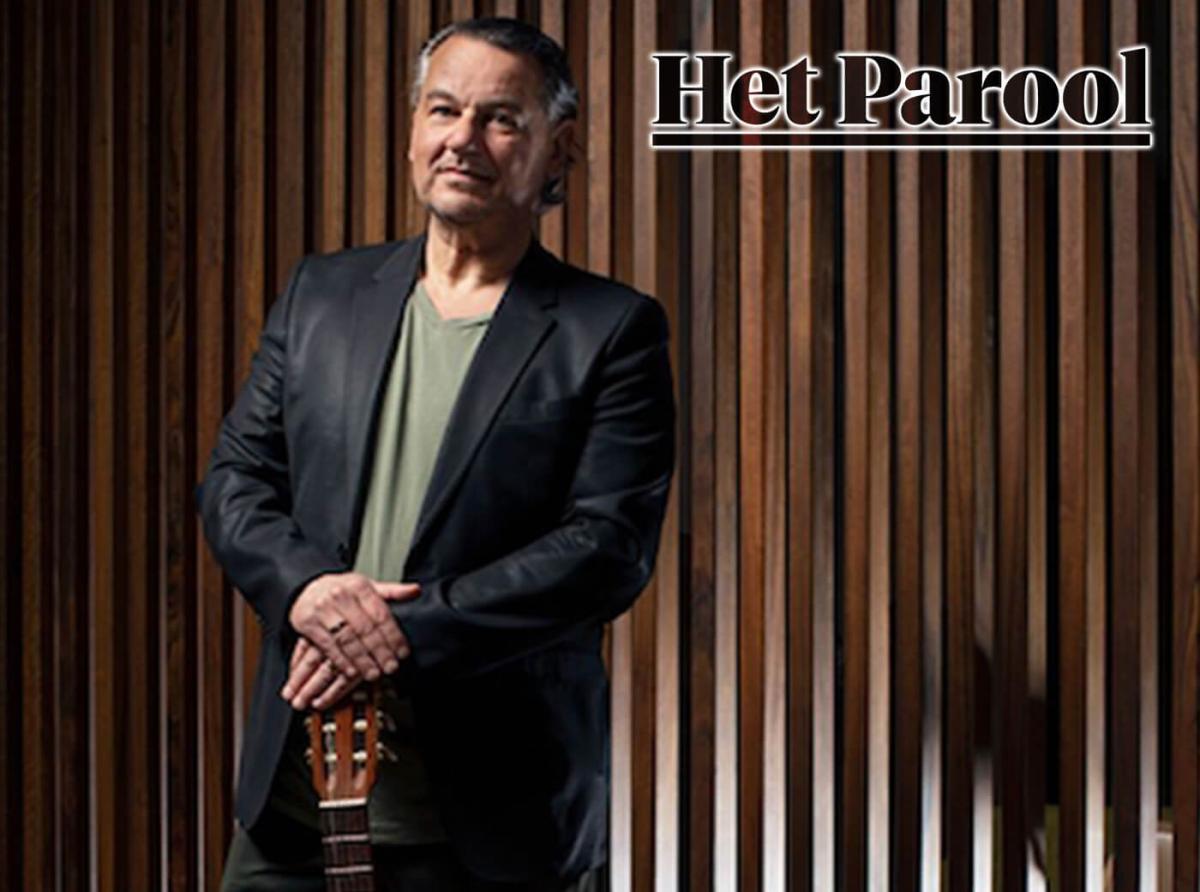
Stephen Emmer (1958) is a composer of theme music for television. This week he received a Buma Award for his oeuvre, which includes the theme tunes for the NOS Journaal and RTL Boulevard, among others.
“I was born not far from my current home, in Oud-Zuid. I didn't live there for long as a little boy. My parents separated when I was four. My mother was a ballet dancer with a travel-loving hippie streak. First, just the two of us moved to India, then to Aruba, and then to Suriname. It was a wonderful time; my mother made sure we truly became part of life there. But I got homesick, longing for sauerkraut, licorice, and Leidseplein. I moved in with my father on Churchilllaan and went to the Amsterdam Lyceum. It took some getting used to, a school for the rich. I was bullied because I wasn't wearing the right designer clothes. In my life, I have moved 28 times since then; I have also lived in London and New York. Being back in the neighbourhood of my childhood home feels familiar and nice, although I would still love to live in California for a few more years.” Voodoo
“When I was 11, my mother—she is now 91 and lives in Amsterdam again—was sent to Suriname by the Amsterdam Foundation for Cultural Cooperation. She went there to teach dance classes. While there, she found it ridiculous to force The Firebird down the throats of the local population. She started her own dance school, with plenty of room for local dance. Sometimes she invited musicians for live music. That is how players of the apinti, an indigenous drum, came. Their rhythms are used in Winti rituals, the Surinamese voodoo. Spirits are summoned through sound and dance. I also took lessons on their instrument. I never thought I would be able to use those lessons for my work later on.” NOS Journaal
“Until 2012, the opening music of the Journaal featured a Surinamese voodoo rhythm. I don't think they ever knew about it there. Yet it was used for over 20 years. I played the rhythm myself on the apinti. By the way: not many people know that Tibetan singing bowls were used under the headlines in the same Journaal music either. Many news tunes contain rather inflammatory sounds; I specifically wanted a meditative element as a counterpoint to all the daily misery of the world.”
Buma Award
“It is nice to receive that recognition. Composers of television music are by definition people of the background. And that is fine. On the other hand, we do have to stand up for our profession. Nowadays, the credits of almost every TV program mention the person who selected the presenter's outfit, but not the creator of the theme music.” That is why, when I was presented with the award on Monday, I emphasised in my speech that we must retain our stubbornness. Even now that marketing is advancing in the TV world. You shouldn't want to sound like something that is already successful, but come up with something yourself.
Fred Emmer
“My father. He passed away in December. In his years as a news anchor, he was a true Dutch superstar. When he started, there was only one TV channel. That ensured a level of fame comparable to Johan Cruyff or Mart Smeets. I noticed that as a boy, too. Dinners at the pancake house would turn into long sessions of signing autographs.”
“My father was a complex and very straightforward man. If he didn't like something, he was and remained opposed to it. Inflexible. As his son, I sometimes struggled with that. There were periods when we didn't speak to each other for years. When I got married for the first time in my early twenties, he wasn't there. A short note was the only thing I received from him.”
“Later, our relationship improved. You achieved more with him through humor than through conflict. And towards the end, he became increasingly sweet. I have his old diaries at home now. He didn't show it at the time, but it turns out he followed my movements closely. That really does me good.” “In the past, I sometimes complained that, as an adult man, I still had to talk about my father. Now I do so with love.”
Seven Minute Man
“When you compose commissioned music for television, you know: people at home barely stop to think that they are hearing something specially made. But some music freaks are actually very much focused on it. One of them once calculated that, on average, music by me could be heard on Dutch TV every seven minutes on some evenings. Funny, isn't it?”
“By now, the NOS Journaal and RTL Nieuws use music by others. The theme tunes for EditieNL, RTL Boulevard, Tijd voor Max, Per seconde wijzer, and the station branding for Radio 1, 2, 4, and 5, and RTL 4, 5, and 7 are still my work. The most recent addition is the theme music for the talk show Beau on RTL 4.” “I was the first full-time professional in this field in the eighties. There are now entire companies dedicated to it. It is interesting for pop musicians as well. They use media music to finance other activities. Actually, I do exactly the same thing. The TV theme tunes pay for my personal work, my records.”
Lou Reed
“He collaborated on my spoken word album Recitement. The fact that he eventually came to our studio to recite a poem was a series of coincidences. It started with a phone call from a music agent in New York. His client had heard my demos on MySpace and wanted to speak with me in New York. That client turned out to be Tony Visconti, the legendary producer of David Bowie’s great albums. He wanted to produce the album. My first reaction: ‘But I don’t have any money for that at all!’ His agent replied subtly: ‘Mister Visconti is no longer in it for the money.’”
Minny Pops
“Amsterdam, 1979. We were a noise band. Truly uncompromising, you know. The fewer people who applauded afterwards, the better, according to our singer Wally van Middendorp. He was the boss of the group and determined the course completely. I was asked to be the guitarist by Dennis Duchhart, who later played in The Scene. We got a contract with the Factory label in Manchester and got to play opening acts for Joy Division and later New Order. Good times. Here, that hardcore approach of ours mainly caused resentment, but in England we had real success. I played in the group for two years. Then the dictatorship became a bit too much for me. I am more the type who wants everyone to have a say in the decision-making.” Lou Reed (2)
“I wanted to use a sample of actor William Hurt’s voice for one of the songs, but couldn’t get the rights sorted out. Then Visconti said: ‘A friend from my tai chi class has just as beautiful a deep voice.’ He said he would send him an email. A day later there was a reply: his tai chi buddy Lou Reed was up for that ‘little European arty-farty project’.”
“Although I didn’t speak to him at length, Reed was absolutely not the professional grouch he is often portrayed as. He asked very politely if we had any wishes regarding his vocal sound. Well, no. Nothing but Lou Reed, please. On the other hand: for the recording, he absolutely had to have a gold Manley microphone in front of him. Visconti even had one in his collection.”
RTL Boulevard
“Just like with pop songs, you can never predict which tune will become a hit. For us, that depends heavily on the success of the program. Boulevard has been around for almost 20 years and has changed everything in the meantime, except for the theme tune. The assignment wasn't easy: coming up with music for gossip on TV. Ultimately, a sleazy saxophone seemed to me to symbolise the gossip best. I did want it at double speed, though, not as sluggish as in a nightclub. Furthermore, it contains sounds you associate with paparazzi: a typewriter, the flash of a camera. It was finished in four days. An ear worm, as it turns out. When I explain what kind of work I do at a birthday party, people often sing the melody on their own: taddataddatadaaa.” Abbey Road
“That is where I recorded my album International Blue in 2015. I played the piano that can also be heard on Hey Jude. Very special. But I already knew the studio from before. In 1988, we recorded the news theme there with the English Royal Philharmonic Orchestra. During that session, we were inspected by the musicians' union. If we didn't pay cash on the spot, the inspector would halt the session. I had to go to the bank and come back with tens of thousands of pounds. A lot of money, yes. But afterwards, we did have the music for the news, the Youth News, Studio Sport, The Hague Today, Conversation with the Prime Minister, and the potential passing of the Queen.” Julian Lennon
“A super sweet, sensitive guy. He sang the song Sleep for England on my album International Blue. We even went to a concert at the Melkweg together. I had run into him at an art exhibition by artist Geert Kollau. Lennon is also a photographer, that’s why. We talked about Liverpool, where I also lived. Two years later, I thought of him for that song, a sort of alternative Christmas song. No, we weren't in the studio together. He recorded his part in Los Angeles and sent it over. I had the same virtual collaboration with Chaka Khan and Midge Ure from Ultravox.
Sam Bettens
“It’s nice that he chooses openness about his private life and transition. It’s also funny to read that he feels so at home with his family in Palm Springs, USA. It used to be a place with a macho, even slightly mafia-like undertone. Now, apparently, it’s much more open-minded. I wish him all the best.”
[Stefan Raatgever - Het Parool]