Beautiful music made between art and tat
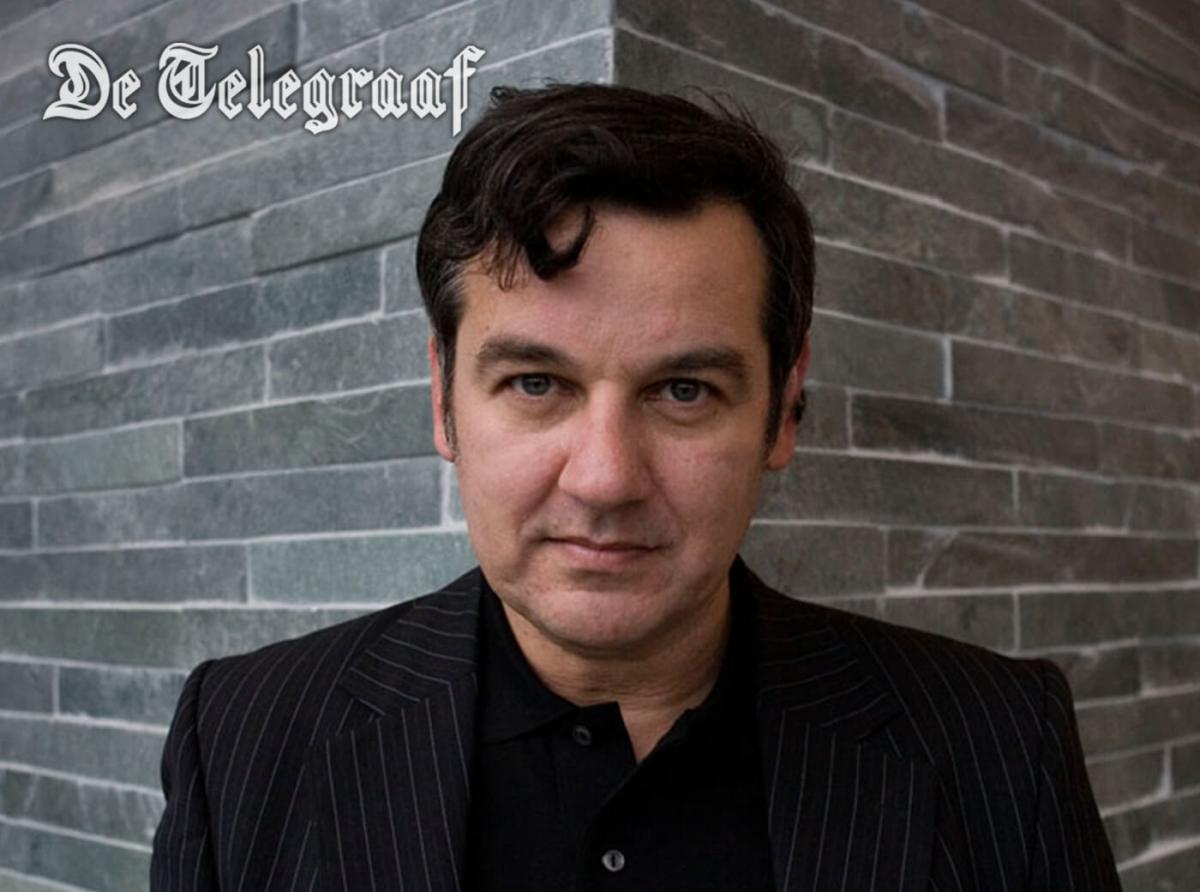
I think you could conduct street interviews on the Albert Cuyp all day without encountering anyone who has ever heard of Stephen Emmer. But the chance of meeting someone who doesn't know his music is minimal.
For that to happen, the person being interviewed would, on principle, never, ever have to listen to the radio or watch TV. Stephen Emmer is, after all, the creator of almost all radio and TV 'tunes', the theme songs for programs that are etched into the collective memory of the Dutch people, if not already ingrained in their hearts.
Anyone who listens back-to-back to the 66 (!) tunes that Emmer ("purely for fun") has compiled on the CD 'MFT' (Music For Television) is overcome by the same emotion every ten seconds: that too? Does anyone else do this work? Just consider. This, and much more, is all the work of Stephen Emmer: the 'station call' of Netherlands 1, 2, and 3, the theme tunes of the KRO, the NOS Evening Show, De Wereld van Boudewijn Buch, the NOS Concert, the VARA quiz 'Per Seconde Wijzer', the AVRO Entertainment Magazine, NOS Laat, and many Teleac courses, plus his pièce de résistance: the theme tune of the NOS News, the relatively cheerful little melody that resonates daily through millions of Dutch living rooms, announcing the bitter and wicked misery that is about to be poured out upon us before the famous gong of the buckets (a good expression in this context!).
I meet Stephen Emmer on the terrace of the Film Museum in Amsterdam's Vondelpark, within walking distance of the spacious house the composer bought on P.C. Hooftstraat—certainly not a poor neighbourhood, but has not yet moved into. Writing music for radio and TV is lucrative work, that much is clear, especially if, like Emmer, you belong to the absolute top of your profession. Institutions based on Catholic, Protestant-Christian, socialist, and humanist principles approach the composer with just as little hesitation as anarcho-liberal private individuals, which, in Emmer's experience, are most fellow artists.
Freedom
"However principled some institutions may be, their briefs are as general as they are vague: it must be warm, human, and friendly. No, I never insist on specification; that would mean voluntarily giving up the freedom that is maximal beforehand, but which, as experience teaches, will become increasingly limited in the course of the creative process. If I do my work well, I hold up a mirror to the client that initially frightens him to death, but to which he comes to attach more and more importance. My artistic reward always comes in phases, always the same ones, moreover: shock, criticism, rejection, nuance, enthusiasm, acceptance, adoration, and, retrospectively, incorporation. By that time, as the supplier of the musical billboard, I have become 'one of us,' whereas, so to speak, I could have long since been working for the competition."
"All the giants in my field, whether you take Ennio Morricone, Lalo Schifrin, or John Barry, occasionally express their frustration at being seen as 'merely' purveyors of musical wallpaper. Then they suddenly start emphasising that they hail from jazz, or that they just managed to get their chamber music performed by the Cleveland Symphony Orchestra. Unfortunately, I am afflicted with that type of inferiority complex as well. The clown wants to play Hamlet!
While my mind keeps roaring that that is not sensible, my heart keeps wailing that it would be heartwarming. It is all due to the fact that, in what I will conveniently call my world, the persistent misunderstanding has taken hold that music must be art or kitsch. But the most beautiful music is made precisely between art and kitsch, and if you consistently refuse to choose between the two, as was proven with 'Twin Peaks,' you can, as a composer, even get lost in a territory that has never been mapped out. Surely that is what everyone should strive for."
"Music accompanying visuals is the most effective form of applied art, yet ever since the days of Charlie Chaplin, the composer is brought in at the very last possible moment. In a flying rush, he then works against a killer 'deadline' of the last scraps of budget, which is actually already used up. I have no idea how many times I have poured some concrete through the spine of such a giant with feet of clay in the scaffolding at the very last minute, just to get him standing, for God's sake. I only remember, with considerable anger, that I was often blamed when he turned out to wobble dangerously at his first steps.
Change
"Quite apart from the fact that, after all these years in this profession, I have also gained some understanding of aspects other than those that are my domain, such as: which lines of a script should be spoken and which are better shown, how something should be staged, and how the camera work should be—multimedia experiments like U2's ZOO-TV—they are the harbingers of the fact that the position of the director—currently still a cross between Jesus Christ and his father—will change drastically in the coming years.
Many of the people he currently still sees as his disciples, who at most need to be served a few pieces of wisdom disguised as riddles at the end of the Last Supper, from which they must deduce for themselves whether they have been branded traitors or are allowed to join the next journey, will, so to speak, have to be taken into confidence during the appetizer."
"To continue the metaphor for a moment: in circles where I am now de facto accepted, I was initially regarded as Thomas, if not Judas. That was because, following the example of Francois Truffaut and his ilk in Cahiers du Cinema—"slap the members of the establishment and then take their place"—I had been rather loud-mouthed for a few years in the now long-defunct progressive music magazine Vinyl. But apart from an unwritten, yet generally applicable law in this business: fifty-somethings work with fifty-somethings, forty-somethings with forty-somethings, thirty-somethings with thirty-somethings, and twenty-somethings will just have to wait a bit, haha; the established order isn't going to voluntarily take early retirement to an overseas territory. So I was allowed to have my way in places where I could do absolutely no harm, at unconventional hours, on stations without measurable listenership, for respectable but powerless institutions like the Humanist Association."
"I am thirty-five now, so you understand how long it took for me to be promoted—and even then, stealthily, from 'Van Gewest Tot Gewest', via 'Sprekershoek' and the 'Jeugdjournaal'—to the real deal. Yes, now that I can be heard daily in millions of living rooms, I get to join the conversation with the grown-ups. Even with the people I once, and quite brilliantly, if I do say so myself, vilified. Tonny Eyk, for example. A great professional. We’ll surely become fishing buddies, right before his death."
"No, I have never been pure in doctrine, in any way whatsoever. As much as I enjoy offering religious clients pagan solutions to their musical problems, I enjoyed just as much shocking the child prodigies of Vinyl with my love for John Barry (composer of the music for James Bond films, including the famous 007 theme JG). Nowadays, there is a wonderful expression for that kind of characterlessness necessary in my profession: postmodern. When someone recently qualified me as such, just before closing time, I was inclined to accept it as a compliment, with the necessary grace. But just to be safe, I denied it anyway, haha."
[De Telegraaf - Jip Golsteijn]