On an adventure in the soul
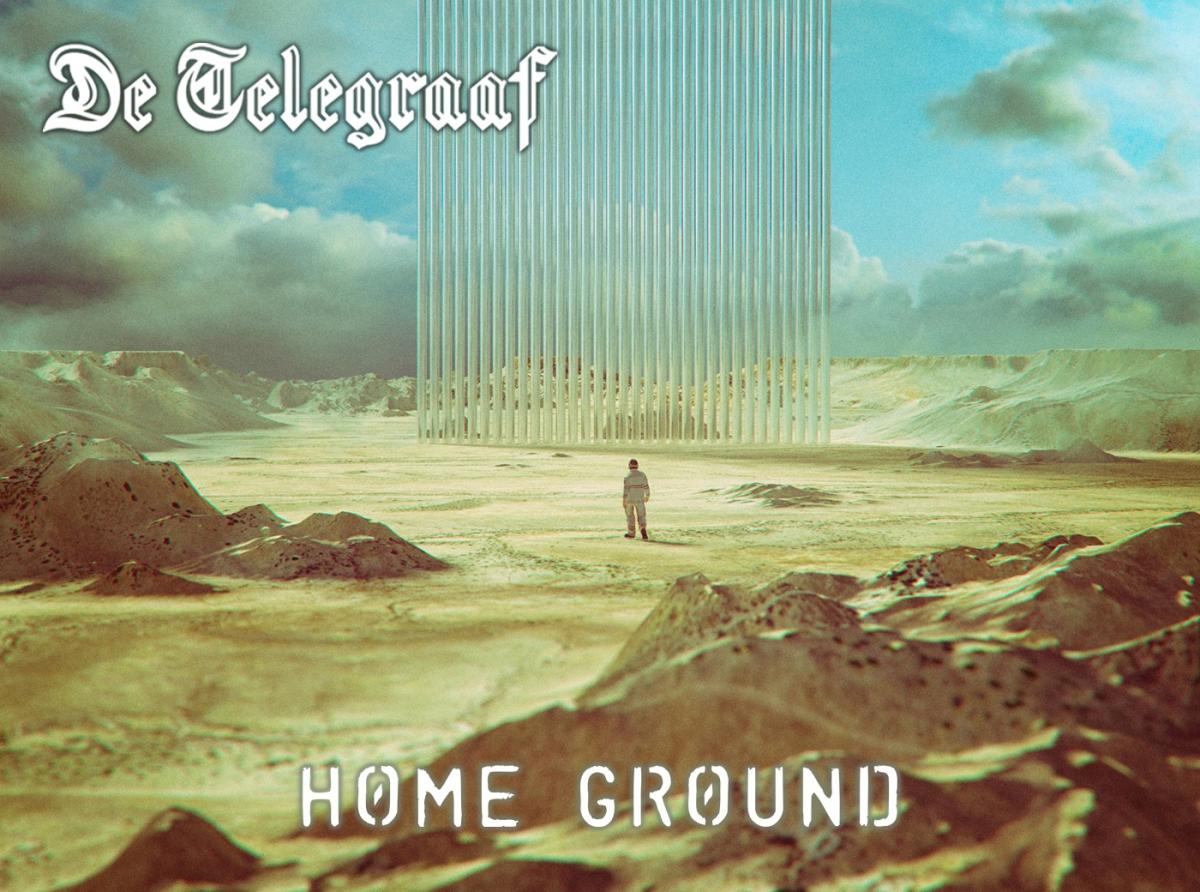
As a tune creator for shows including RTL Boulevard, RTL Late Night and the NOS Journaal, Stephen Emmer is the most listened-to composer in the Netherlands. It is less widely known that the Amsterdammer (59) also maintains a – as he calls it – 'free career'. There is no shortage of recognition; Emmer's previous album International Blue received international acclaim. But his soul project Home Ground, which is released on Friday, actually deserves more than that.
We wrote about it back in 2014
International Blue was one of the most beautiful, layered, and original crooner records ever made in our country. In hindsight, we were voices crying in the wilderness, admits Emmer (son of former news anchor Fred Emmer, who is still well-known to many) on a sunny terrace in the capital. "Lots of critical acclaim, yes. On quite prestigious platforms, too." With a grin: "Only there were fewer sales. I just didn't let it stop me."
Chaka Khan
He explains: “I am in a privileged position; I earn my money through commissioned work. Record companies don’t understand it, but for me, this is art for art’s sake. Many people don’t even know that I have extended my tunes into my personal projects. I’m getting a number of remixes of the track I made with Chaka Kahn for this coming summer, including one from Ministry Of Sound, so we’re going to approach it in a different way. Until then, I’m actually not interested in the numbers.”
While the Amsterdammer explored crooner pop on his previous album, on the new Home Ground he has dived into soul music. Not literally, of course; that’s not Emmer’s style. “I use the parameters, but hopefully with the same signature with which I approached crooner music and spoken word before.” To start at the beginning: “The basis is that I cannot sing myself. I would like to, but I am simply obliged to collaborate in that regard. And where is the added value when you are talking about soul? That started with Mary Griffin, backing vocalist for George Clinton, for whom I deemed a song suitable. On the recording day, two years ago now, she had the flu, but as soon as she started singing, I felt the tears welling up. She made what I had made better. Her vocals were emotionally complementary. That set me on this track.”
The typical Emmerian aspect of this process is not even the other singers he subsequently approached, even though they include renowned soul names such as Chaka Khan, Frank McComb, and the late Leon Ware. The defining characteristic is rather what Emmer himself calls 'adventure'.
Tintin
“I started searching and listening, turned into a sort of Tintin behind my computer, and ended up with the symphonic seventies soul of bands like Rotary Connection. A somewhat obscure band, but one with a huge adventurer in the studio, who was later also responsible for that typical sound of Earth, Wind & Fire. Slowly but surely, I arrived at the blueprint for Home Ground.”
He clarifies: “In a way, it is almost compulsive to vary what those kinds of people did and what I do. Like Brian Wilson actually imitating Chuck Berry, but with tricky chords in between because Wilson just happened to be able to do that. The result is something that sounds quite ordinary, but as soon as you start playing it, it has an underlying layer of something complex. This caters to the average listener who just wants a nice song, mind you, but also to the one seeking complexity. That best of both worlds is, in my opinion, decisive in what makes music timeless.”
Unconventional
The result, Home Ground, is nothing short of stunningly unconventional. “Look at Max Martin, the man who made Justin Timberlake’s Can’t Stop That Feeling. I think it’s incredibly good, but will I still think that in thirteen or 33 years? In the short term, it’s a bite-sized chunk that I could never make. But if you have long-term ambitions, there should be fewer temporary elements in it. Ed Sheeran showed on RTL Late Night how you can easily make thirty songs on the same chords, because everyone draws from the same sources by now. Here, I have actually broken with how people write songs nowadays and looked at what is viable from antiquity.” He concludes, once again with a grin: “Making more of the same is boring anyway.”
[De Telegraaf - Bart Wijlaars]