The godfather of Dutch TV theme tunes
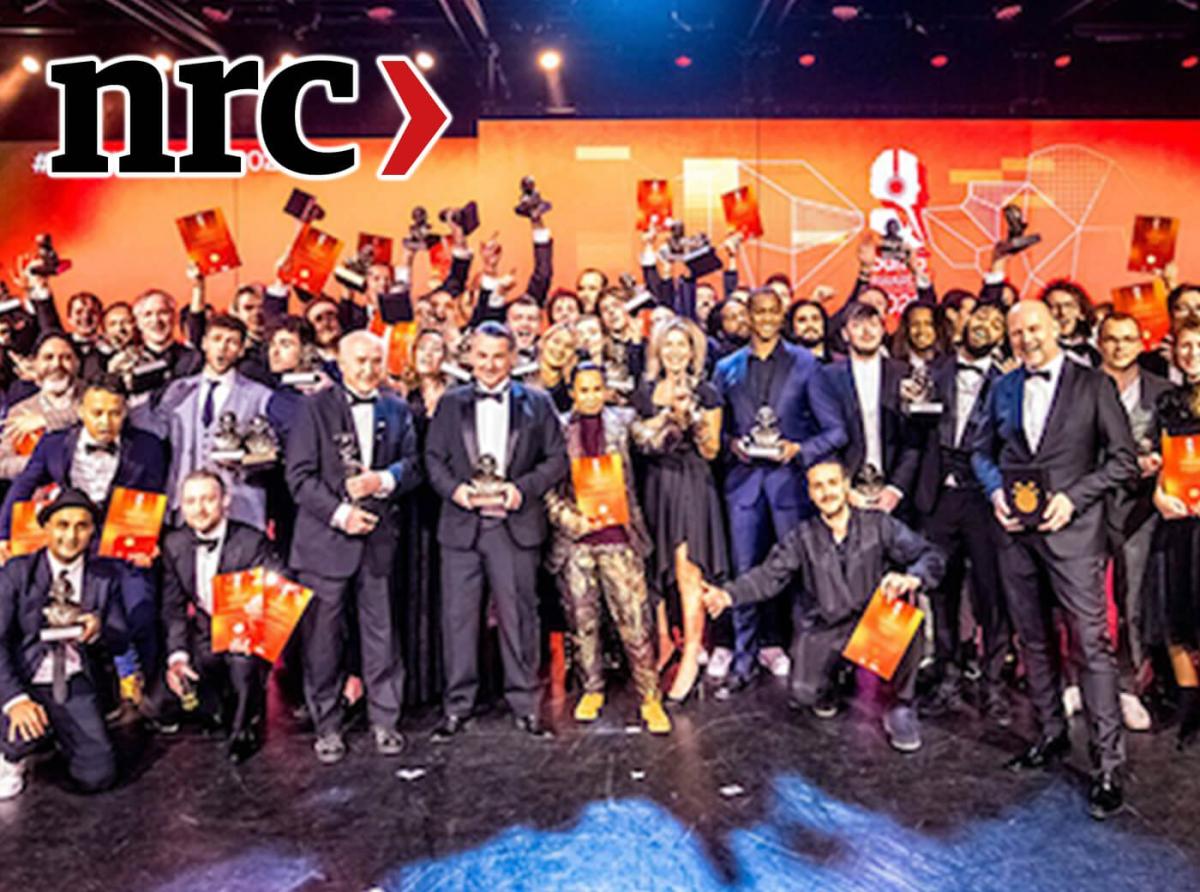
It was once calculated that music by Stephen Emmer can be heard somewhere on radio or TV every seven minutes. His oeuvre was honoured this week.
The beeps at the start of the NOS Journaal. The iconic saxophone riff that introduces RTL Boulevard. The funky opening theme for RTL Late Night. This is just a small selection from the more than a thousand tunes Stephen Emmer has created for radio and television over the past thirty-five years. In Hilversum, he is called the ‘seven minute man,’ because it was once calculated that one of his pieces of music can be heard on radio or TV every seven minutes. For this impressive oeuvre, Emmer received the Buma Oeuvre Award Multimedia this week, a major prize for media composers.
RK: What was your first opening theme? SE: “I made that one for Kwartslag, a program by the Humanist Association from 1984. I came from the punk and new wave scene, but the program’s designer found my work visual and cinematic. So I was invited to come in. When I presented the theme tune, everyone said: ‘Gosh, takes some getting used to.’ I would hear that often. People always like the old tune best, or had expected something slightly different.
“Through that first assignment, I learned that creating TV and radio theme tunes is a form of diplomacy. It often makes no sense to play the stubborn creative type. I remember there was a discussion about the marimba, which a lady found ‘too Japanese.’ I hesitated whether to argue with her, but chose to say: please listen again.” RK: Are you the stubborn or the compliant type?
SE: “The more hours I get, the more stubborn I become. About fifteen years ago, I noticed that less and less was allowed in commissioned music. Less imaginative people, the marketers and consultants, started interfering. I resisted that, and I believe I was perceived as stubborn at the time. That is when I started making more free music.”
RK: And shortly after, you were in the studio with Lou Reed.
SE: “That’s right. Around 2006, I started composing background music for spoken literature. That was picked up by producer Tony Visconti, one of my heroes. That man has worked with David Bowie and Iggy Pop. He found my music special, so I was allowed to come to his studio in New York to record an album. When we were looking for a voice for a song, he said he would just call a friend. That turned out to be Lou Reed. He thought it would be fun to do a ‘European arty-farty project’.”
RK: You are the son of the famous news anchor Fred Emmer. Did that family connection open doors in Hilversum?
SE: “No, as a new waver from Amsterdam, I found the ‘Gooise matras’ (a term referring to a stereotypical, often associated with the wealthy Gooi region) to be a nightmare. That is why I did my second assignment under a pseudonym. It was a test to see if I could manage without my father’s surname. The joy was, of course, great when they liked it.”
RK: Where do you get your ideas from?
SE: “Everywhere and nowhere. I remember my father-in-law at the time playing a very exotic dog whistle when I was walking through the woods with him one time. Like, fiet-fiet-fiet-fiet-fiet-fiet-fiet-fiet. I thought it was an interesting little motif, so that became the theme tune for NOS Laat, the predecessor of Nieuwsuur.”
RK: One of your most iconic theme tunes is the saxophone riff from RTL Boulevard. How did that come about? SE: “I envisioned a paparazzi-like atmosphere for the program, and I associated that with music you might hear in a Las Vegas-style strip club. One of those sleazy saxophones. But the program isn't a striptease. It’s a different form of exposé, a high-energy exposé. So I came up with the idea of using a sultry saxophone like that, but played twice as fast as they play in a nightclub.”
RK: Does it ever go wrong? SE: “Certainly. The Studio Sport theme tune! I was invited by the NOS in the early nineties to take care of the musical branding: that means designing all the tunes and sounds for a broadcaster and its programs. At the time, the music at the NOS was a patchwork of styles. I felt they needed to align better.
“That also meant I had to revamp the Studio Sport opening theme. Precisely because of its iconic status, I decided to keep the old tune, but to give it a timbre that matched the other programs. Tonny Eyk, the composer of the original, was furious about my reworking. He went to the media and said that cultural heritage was being murdered. When petitions came in from viewers, the broadcaster said: this is going to cause us reputation damage. So the old tune was quickly restored.”
RK: It seems quite difficult to create a tune that fits based on a conversation with program makers. SE: “Over the years, I’ve noticed that it works much better to ask what they don’t want. Absolutely not with a house rhythm. Absolutely not ending sadly. Then you know what remains at the bottom line.
“But it also happens often enough that program makers don’t have a clear picture of their own program. When I started working for Tros Crime Time, the makers felt they were somewhere between NRC Handelsblad and the Haagse Post. But when I saw the footage, I thought: this is De Nieuwe Revu. It was quite sensationalist. When they heard the theme tune, the makers initially said: but this isn’t who we are! Yet they took it. That’s when it became clear to me that with identity music, you can hold up a mirror to your client. You can establish a profile that the makers didn’t realise beforehand was their profile. Strange how that sometimes works better with sound than with words.”
[Reinier Kist - NRC]